







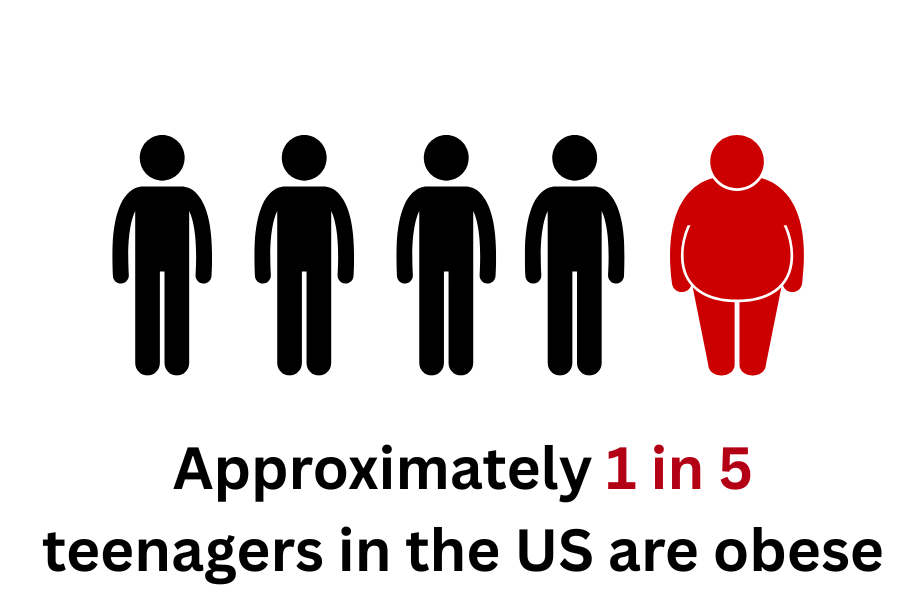






In the 2020s in the United States, teenage obesity has become so normalised in America that many people barely react to it anymore, and that’s a serious problem. The obesity rates among teenagers were at 21%, the highest in American history. This is a health crisis that needs more attention.
The experts I spoke to confirmed something I already suspected: American teenagers are becoming increasingly disconnected from physical activity and healthy habits. Some experts, like Corralville therapist Farrah Bondi, had more unique views, like how the fast-paced nature of American society causes many not to take their time and just try to find the easiest solution (which, in a lot of cases, just so happens to be the most unhealthy). However, she does not deny the importance of vices like Uber Eats.
“I think the increase in obesity can be attributed to how everyone is in a rush. When people want lunch, they’re less concerned with health and more with cost and speed, which is why I think McDonald’s is so popular,” Bondi said, “When you’re hungry in a pinch, you get fast food. When you are struggling to prepare a family dinner in time, you hurriedly order Uber Eats.”
According to the experts here at City High, such as Mr. Sabres and Ms. Angie, the lack of physical activity and increased reliance on at-home vices lead to these insane obesity rates.
“Teens are more reliant on ordering food via their phone than going in person. I think it makes a big difference,” Angie, the school nurse, said. Nurse Angie also believes the unlimited availability of food and drink that lacks proper nutrition is adding to the obesity problem.
“Some reasons for this are all the activities available to teens that require little or no physical activity, like gaming, and the unlimited social media platforms,” Mr. Sabres added. “The nutrition concerns stem from the availability of many food items that lack the ingredients necessary to meet nutritional guidelines. I see so many students with chips, Pop-Tarts, and energy drinks, certainly not what nutritionists would advise”.
This probably should have been brought up at the start, but obesity is a medical classification based on people with a BMI of 30 or higher. This column is not meant to stigmatise; it’s a fact, a frightening fact, but a fact nonetheless that BMIs over 30 among teenagers are on the rise. It was first reported that obesity rates among teenagers had climbed to 21% in 2023; however, over the last 3 years, the problem hasn’t gotten better. If anything, it’s only gotten worse. The CDC(Center for Disease Control) finds that some of this might be at least in part out of human control, as some factors are natural or economic, but that doesn’t change the fact that a lot of this is in human control, and the secret to making sure it’s under human control is to listen to the experts, and according to the experts, the best way to reduce teenage obesity is for younger people to get outside more, hit the gym more, eat more healthy foods, learn how to make more healthy foods, and be less reliant on at-home amenities. It’s a step-by-step process, and it’s important to remember that every step counts!!! If any Little Hawks reading this are interested in improving their health habits, please make sure to talk to your local health professional, or feel free to use my advice brought up in this column.


