











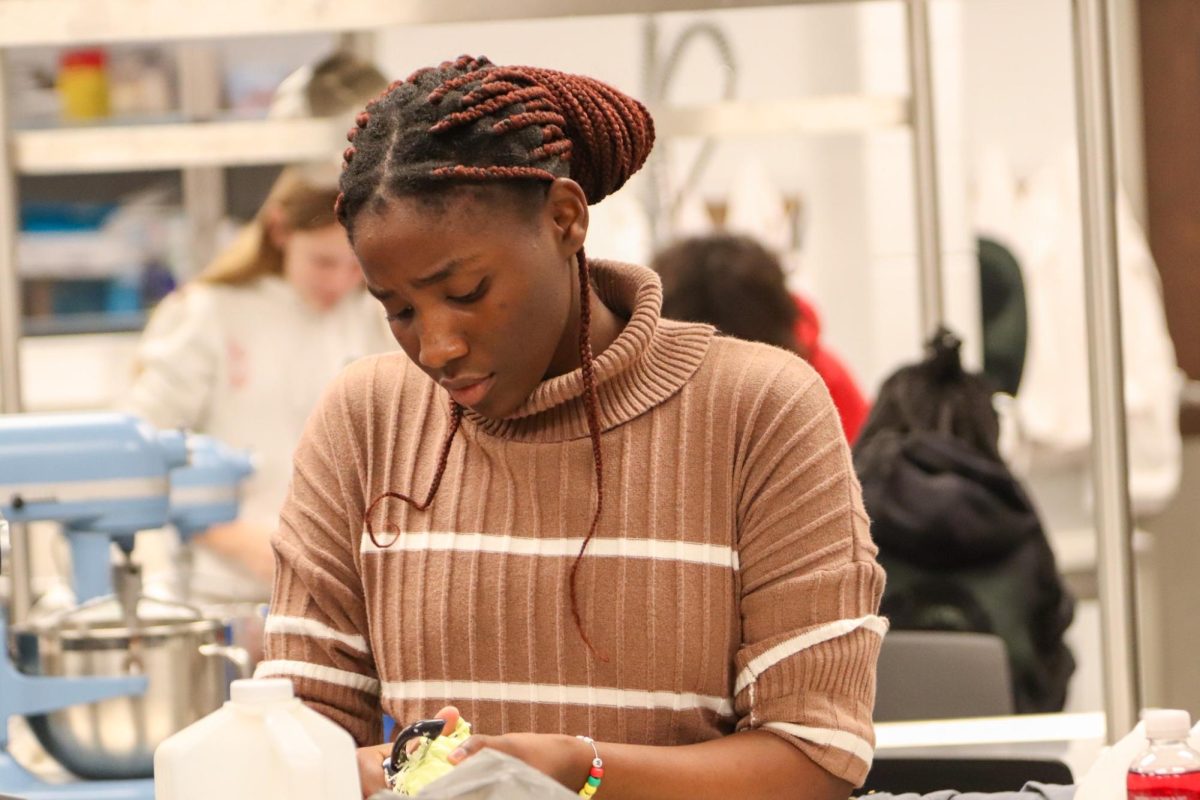
Donna Grunstadt first created the French cooking competition and continued by her predecessor, Monsieur Balcean. Balcean first learned about the competition during his student teaching with Grunstadt.
“Donna Grunstadt would host this competition for her French students. While I was student teaching with her, I observed that she did it with her students yearly. After she retired, I decided to take over and keep the tradition going,” Balcean said.
The purpose of the French competition is to encourage teamwork, creativity, and confidence while allowing students to enjoy and learn from one another. At the end of the competition, the goal is for everyone to leave happy, even if they didn’t win.
“The French competition is fun, and it allows anybody in the school to participate, not just French students. It’s inclusive and helps people see that French influence exists beyond just France,” Jaclyn Ceurvorst, another City High french teacher, said.
This year, Eleanor Oates ‘29 and Max Sherburne ‘29 won first place overall for their dish, ratatouille, a classic French Provençal vegetable stew featuring eggplant, zucchini, tomatoes, peppers, and onions. They signed up because they both needed a partner and knew each other. The two signed up together because they realized they both needed a partner and were perfect since they already knew each other.
“The competition seemed like a fun thing to do, and Sherburne and I both needed a partner, so we partnered up together,” Oates ‘29 said. “Ratatouille is the first dish you think of in America, especially because of the movie. We worked really well together by splitting the tasks up and completing them quickly.”
Madison Glass ’29 and Lila Maclnnis ‘29 also participated in the French competition, winning first place for best dessert. The two signed up together to make madelines, a small, traditional French sponge cake with a distinctive shell shape, known for its buttery flavor, light texture, and signature “hump” on one side.
“Since we’re in French class, and our French teacher is always talking about the French competition, we thought it would be a good experience for us to get together and bond,” Maclnnis said. My French teacher suggested that we make Madeleines, and I thought it would be fun because there are a lot of different ways to make them, so we were able to have fun with different toppings and glazes.”
Looking ahead, the French club plans to continue hosting similar events throughout the school year. Another competition in February, where students can showcase their culinary skills, along with many more culinary competitions that are scheduled to take place throughout the year, including a dessert competition and a crêpe-making competition.
“We also want to have another cooking contest with desserts only in February. We are about to set the date for it, and then we usually host a crêpe-making activity in class for the holiday that’s all about crêpes.” Ceurvorst said
In addition to creativity and presentation, preparation plays a major role in students’ success during the competition. Preparation, practice, and confidence are key factors for anyone trying to participate in the French cooking competition.
“We met and practiced together, so we were able to plan out what we were doing and pick out the glazes and toppings that we were using, and make sure everything worked just before we actually did at the competition,” Glass said.
Sherburne also emphasized the importance of teamwork and organization, explaining that working with the right partner and clearly dividing responsibilities helped the process run more smoothly.
“Whenever you’re choosing your partner, choose someone you like to work with. Dividing up the tasks, making a plan to decide how you want to execute them, and a recipe are really important, too. That was the first thing we did,” Sherburne ‘29 said.
Each dish made by the contestants is broken down and evaluated in multiple categories using specific guidelines to ensure fairness across the competition. As each team presents its dishes, the judges consider more than just taste.
“There’s an appearance category, a texture category, an overall flavor category, an authenticity category, and then the presentation, how they brought the dishes to us and explained what they were,” Ceurvorst said.
Beyond the competition and judging, the French cooking competition is meant to be an enjoyable experience that builds confidence and encourages collaboration among students. It allows students to have fun working their magic, show their cooking skills with confidence, and compete while still bonding with one another.
“My favorite part is always watching students work their magic. Everybody picks something they want to shine at or show confidence in. It’s a joy to watch. That’s why I’m here, to help people find things they enjoy doing,” Ceurvorst said.
Over time, the French cooking competition has become a stable tradition of the French club, giving students an opportunity to engage with French culture outside of the classroom.

