









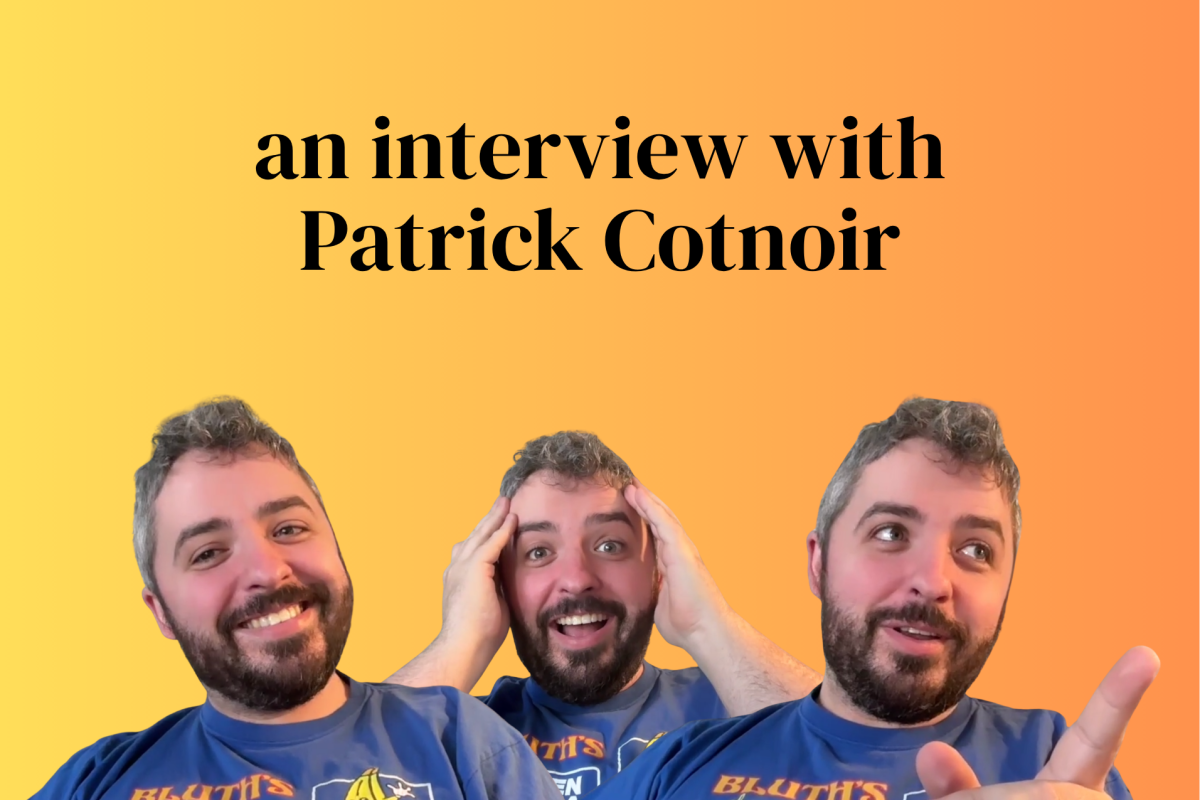


J. Hoberman was one of Bilge Ebiri’s guys.
“Village Voice had a number of different critics, and I’d read all of them. But J. Hoberman was a critic I really, really, really admired,” he told me. “I was just interested in what he had to say. If he really loved something, I was like, Alright, I gotta go see this.”
This way of reading film criticism (having reliable sources you trust and return to) used to be the norm. “And that’s shifted gradually,” Ebiri said. “You used to go to Salon and then you’d read Stephanie Zacharek, or Andrew O’Hehir or whoever. And while we still do have outlets, everything is much more based on traffic. Everything is much more fragmented. So now people might go to Vulture and think, Oh, I gotta read what the critics at Vulture wrote this week. But more often than not, they’re going to come to that review because it popped up on Google or Twitter.”
Well, unbeknownst to Ebiri (until very recently), I still find my film criticism the old-fashioned way. That is to say, on the internet. Okay, so maybe not quite the old-fashioned way, but I have my guys. I read their stuff every week. Ebiri is one of those guys. It seems to me that modern-day film critics tend to get a bad reputation from the general public. They’re often accused of being fun-hating or cynical. As somebody who’s been on the other side of film commentary, however, I’ve always disagreed with these sentiments. I find that my issues with a movie can always be traced back to a love for the medium and its potential.
Part of what’s impressive about Ebiri’s work is that that love is always apparent. This is—in part—because of his history of making and studying filmmaking.
“I studied film in college and I read a lot of film criticism and a lot of film theory,” he told me. “I was always kind of a pseudo-intellectual film appreciator, but my concentration in film was production. So for a long time I was thinking, I’m not one of these people who did criticism because they couldn’t make films—I was able to do both. I always thought, Oh, if I become a filmmaker, I would still also be a film critic. Having some appreciation of how hard it is to make even a barely coherent movie, sometimes I’ll cut movies a little slack.”
It should also be mentioned that, along with his experience in the medium, Ebiri’s very aware of how internet clickbait works. “A hyperbolic headline gets clicks and a headline that’s middling doesn’t. ‘This movie is okay, despite its flaws’ doesn’t get you clicks. ‘This is the greatest thing I’ve ever seen’ gets you clicks. ‘This is the worst piece of sh*t I’ve ever seen’ gets you clicks,” he said. “ Sometimes I’ll see a friend of mine tweet a review that they wrote and I’ll think, Wow, it sounds like they really hated this movie. Then I read the review and no, they just thought the movie didn’t work entirely.”
This awareness has helped Ebiri in a lot of ways, but he still sometimes feels conflicted about it. “We have to always be mindful. But that’s a challenge in this day and age,” he said. “I hate [clickbait titles] personally, because it does force me sometimes into trying to sound like I’m really vigorously defending a movie that I think is just good.”
Or sometimes I wind up knocking a movie that is pretty good that just isn’t as great as it should be. It’s funny because like, Marty Supreme is a great example of this. It’s a movie I think is very well made on a certain level, and incredibly well-acted. But I have some issues with it—as I tend to have issues with a lot of Safdie films. My headline was something like, Timothee Chalamet Gives the Performance of His Life in Marty Supreme, which I agree with—I actually think it’s probably the best performance he’s given—but you sometimes have to think, How do I frame this as a headline that will get people not just to click on it, but to actually read it? Because ultimately I want them to actually read the review. The review is the thing I poured my heart and soul into. That’s the thing I ultimately want them to engage with. And sometimes you’ll read the comments on a piece and it’s so clear that they just read the headline and maybe the first sentence.”
Of course, our conversation didn’t just revolve around film criticism. Ebiri has a lot of thoughts about the state of the industry as well. In a recent piece, he talked about how studios right now are struggling to figure out how to get general awareness out about a movie.
“I don’t have great solutions to these problems,” he admitted. “One thing I will say though, is that I’ve spent a lot of time talking to people who own and manage small movie theaters and the thing they always say is that they go out of their way to try and turn each film into an event.”
Ebiri then talked specifically about the crisis going on in documentary distribution right now. Where major studios, but also smaller ones like Neon and A24 aren’t buying them anymore because of how hard they are to market. “There are a bunch of different economic forces that are kind of bearing on this, but one thing that happens is these national companies aren’t necessarily built to be able to release a film in a town in Maine, for instance. And create an event around it that will allow the people in that area that will interest the people in that area”
“A small documentary doesn’t have the budget to send its filmmaker out all over the country introducing the movies, and they often don’t have some celebrity attached that can draw people. So they need to use these little theaters as their own resources, because those theaters will do the work,” he said. “I feel like that’s an interesting model for bigger chains. Obviously, things like Wicked and Avatar are their own thing, but those are films that people might be aware of, but they might not be aware of other movies that are opening at that theater because those movies haven’t had a huge marketing budget.
“It would require a lot of vision for a movie theater chain to start doing something like this, because very often they don’t have a ton of skilled laborers. But I feel like if they put some resources towards trying to make these things more like events. They could get a lot of bang for their buck.”
Smalltown theater or big city multiplex, Ebiri maintains that the theatrical experience is an essential part of filmgoing. For one reason in particular: “The movie should be bigger than you are. You have to give it that space. Now, that’s the thing—a terrible movie that’s bigger than you are will seem even worse, which is one way of appreciating how bad it is. But then some movies really open up when you see them big. Like The Passion of Joan of Arc. Which is basically just close-ups, but they’re close-ups that were shot in the 1920s, specifically to be seen huge. The whole point of the movie is to show you these enormous faces. Today, somebody would look at a film like that and say, “Eh, it doesn’t need a theatrical release. You can appreciate that on Netflix. But no—you can’t.It’s all about spectacle now, but you know what movies you really need to keep your attention on? The slower and quieter ones. I think it’s really valuable to see those in the theater.”
“Christopher Nolan told me something interesting once. We went on this tangent about the theatrical experience, and he feels—and I agree with him—that there is some kind of almost-ESP thing that happens when humans are together and watching something. You start to pick up on the energies around you and it becomes a completely different experience if you’re watching something with other people.”
Ebiri then took a moment and decided to take this idea one step further: “I actually do believe that one day in the future, we will discover that we can actually kind of read each other’s minds. Not because we have some amazing sixth sense, but [because] our brains are attuned to things that we may not be entirely aware of. That sounds stupid, but I sense that when I’m in the theater with people.”
Read Ebiri’s articles at Vulture as well as his recent piece in the Yale Review.

